.png)
To grow your brand, you need to be remembered
Memory = repetition + relevancy
People like to think brand campaigns are national, but all above the line media is geographic. A billboard is tied to a single street. A TV campaign is locked to a region. Unless you have the budget to blast your brand across every inch of the country, geographic focus and exclusion matter.
How does a brand spread?
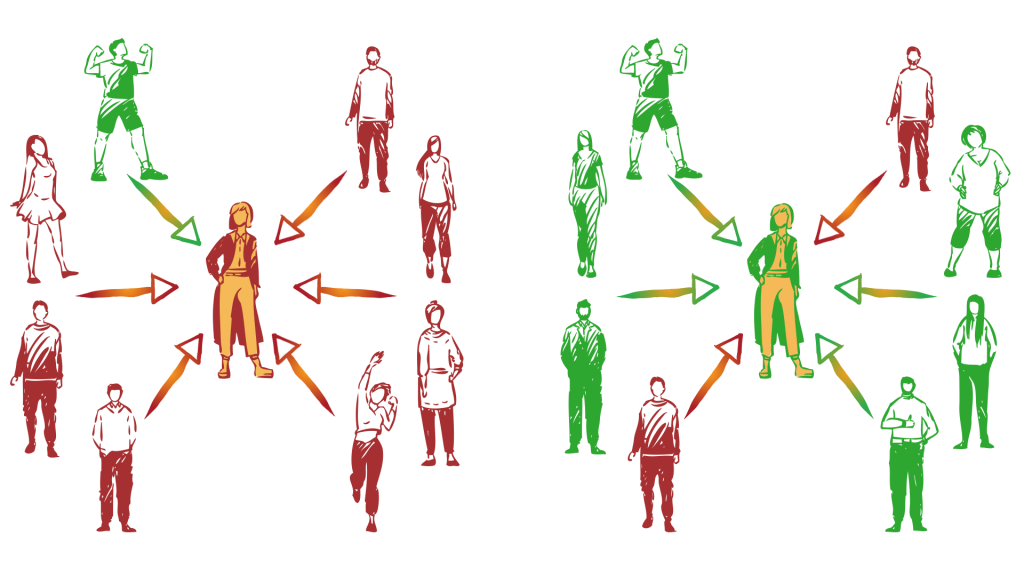
92% of people are unlikely to buy a brand unless they see or hear others around them using it. This is social copying or, as we like to call it, herd mentality.
Traditionally, brands tackle this with high frequency brand communications, but that takes a lot of effort to build up. It is why Mark Ritson says, small brands stay small.
To spread the memory and usage of your brand, you need relevancy and relevancy comes from people like us.
If I see a lot of people in my area ordering organic veg boxes, my subconscious starts to whisper, people like me buy those products.
That is because humans naturally cluster around similar people. When we hear and see things in our local community, they carry weight.
This familiarity is what makes people aware of your brand. But let’s be clear these are not customers yet. These are the people on the edge of your brand consciousness, the ones who are not quite ready or do not yet have the need.
And this is exactly where brand work works.
A tale of two marketers: Barry vs Belinda
Belinda and Barry were given the task of growing their subscription services brand. Who would you rather be?
Barry
Barry was a traditional marketer. He had been head of brand at a big FMCG company and knew how to shout from the rooftops. His plan? Blast every region in the UK with an emotionally charged above the line campaign.
One year later, Barry was back on LinkedIn looking for a new job. The campaign had not worked, the marketing budget had been slashed, and so had the team.
Belinda
Belinda had a very different background she was a child behavioural consultant. Schools brought her in when their usual tactics failed.
Belinda had seen it before. The headteacher stands at the front of the assembly hall and lectures the whole school on behaviour. Nobody listens. Nothing changes.
Her approach was different. She worked intensively with a small group, focusing on those who already showed the right behaviour. Soon, others started to take notice. Some peered in, some wanted to join. Slowly but surely, she invited them in.
Once about 25% of the school had adopted the new behaviour, it spread like wildfire.
So when she pitched her brand strategy, she did not say, let’s go everywhere.
She said, let’s find the pockets where our brand already has traction and focus on the people on the edge of those areas. As those areas grew, they shifted their focus, slowly expanding outward.
One year later, their brand penetration had increased by 13.7%. The CFO was so impressed they gave her extra budget to accelerate growth.
And here is the part that will make the CFO very happy:
Customers acquired from areas where herd mentality is on your side spend more, stay longer, and generate higher profits.
That is brand building done right.