It’s easy to think marketing is just about budget: spend more, get more. But budget is only the volume control. What really matters is whether people are paying attention, and if they’re paying attention together.
Growth doesn’t spread the way your media plan says it should. It spreads through people. Through conversations, copying, and that moment when you go from “never heard of them” to “oh yeah, I keep seeing them around.”
If no one talks about you, your budget is like a flyer dropped in a puddle. Spending more won’t help because it’s still a soggy flyer. But when people talk about you in the right places, even a small budget can go a long way.
That is why connected people beat bigger budgets.
So if you’re looking to get started or you’re unsure if this is for you, why not download our book on herd mentality? It is full of practical examples and clear explanations to help you work this stuff out. It’s free and can be read in a morning.
Click here to get your free book
Herd mentality (connected people) is not an abstract idea
What we mean by Herd mentality is people copying each other, this isn’t carelessness or laziness. It’s a shortcut our brains use when life is busy, and choices feel risky. If you’ve ever booked a restaurant because three people mentioned it, you’ve seen herd mentality in action. How about that recent book purchase, had you heard it was good from someone else…
In marketing, it looks like this: you see a brand on your neighbour’s doorstep, your friend mentions it, you notice it in a café, then an ad appears. By then, the ad is confirming what you already know. The ad arrives at the right moment in a connected chain. If you think about this without the connected chain of word of mouth referals if the audience has never heard of you, that ad hits our inbult filtyer in our brains, and your audience quickly ignores and moves on from your ad, you’re basically paying to be ignored on a large scale.

Simple versus complex contagion: why one exposure usually is not enough
Some things spread after just one exposure, like a funny video, a meme, a half-price deal, or a celebrity scandal. That’s simple contagion. Most marketers wish everything worked that way.
But most buying decisions are not simple, and they do not circulate like a meme. Switching providers, trying a new brand, donating, committing to a subscription, or even spending a bit more on a “better” version of something all tend to involve social proof. These are complex contagions, meaning people rarely act after a single nudge.
People need to hear it more than once, from more than one source, especially from people they trust. The goal isn’t just to reach someone once. It’s to show up again and again in the same communities, close enough together so it feels real, not random.
Repeat targeting is not waste. It is how ideas spread.
In media planning, repeat targeting can seem like a waste. Why target the same area twice when you could cover more ground? It’s like going to the gym once and wondering why nothing’s changed. Behaviour change needs repetition. People need to know they’re not the first to jump.
If you want someone to switch, donate, subscribe, or try something new, they usually need more than one signal from more than one source, close enough together so it feels real. The first exposure builds recognition, and the next ones give the confidence to act. That’s what “connected people” really means in practice. It’s not just a vibe. It’s reinforcement.
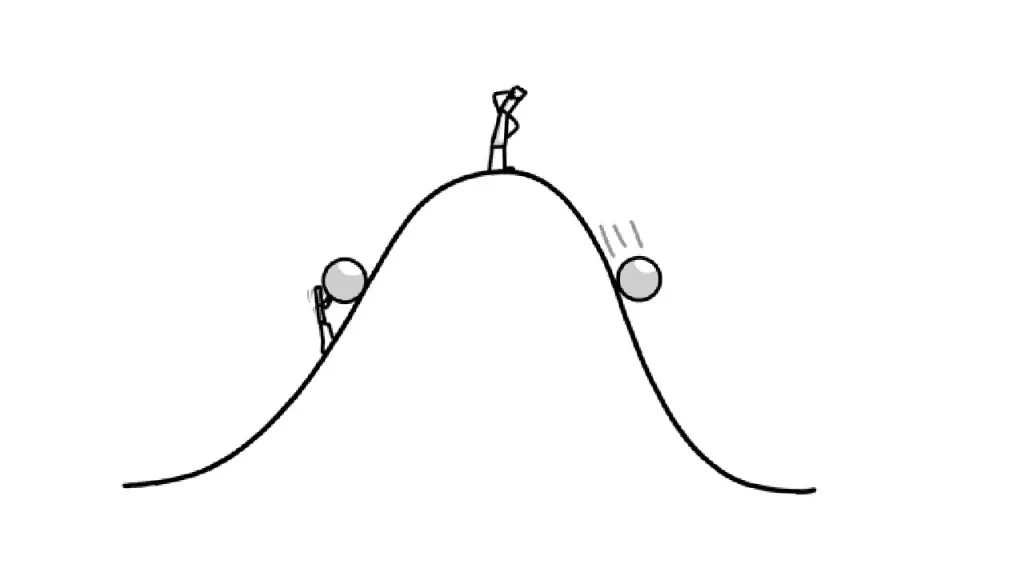
Thresholds: the moment a spectator becomes a buyer
A threshold is the point at which someone goes from watching to buying. The majority of people don’t buy the first time they see you because seeing isn’t enough. They buy when enough social proof adds up and pushes them over the line.
That tipping point can happen in many everyday ways. A friend recommends you, they spot you “in the wild” through deliveries, retail, events, local presence, or they see you again in a channel that feels credible just when they need it. Think of it like joining a standing ovation. Most people don’t start it. They join when it feels safe.
Big budgets try to force thresholds with more spending, but most of it misses because it lands in the wrong context. Connected marketing lowers the threshold by stacking signals in the same places, so the decision seems obvious rather than risky.
Talkability is not a tagline. It is a design challenge.
Brands say they want word of mouth, as if you can add it to the agenda between ‘new campaign’ and ‘lunch’. It doesn’t work like that. Word of mouth happens when you give people something easy to share, and make them feel good for sharing it. In real life, talkability usually comes from a genuinely useful offer that makes someone look smart for recommending it, a moment in the experience worth mentioning, or a visible cue like ‘I keep seeing them everywhere’. Talkability is built. You have to design it. To outperform big budgets, you need two things working together.
First, you need a reason for people to talk. Make the experience worth sharing, and give them a story that’s easy to pass on.
Second, you need a plan that clusters exposure in the right places. Don’t spread budget evenly like butter on toast. Concentrate signals where influence spreads fastest, that’s where reinforcement happens and thresholds get crossed.

How Herdify helps
Herdify finds where real-world word of mouth is already spreading, so your media works harder.
We do it by analysing the timing and location of your sales, using behavioural science models originally built to track how viruses spread through communities. That lets planners and marketers find the places where influence is already building, rather than guessing based on neat looking postcodes or broad demographic buckets.
With Herdify, you can:
- Find high-value communities where people already advocate for you
- Predict where buzz is likely to spread next so that you can move early
- Place media where it actually changes decisions, not just delivers reach
- Cut wasted spend on cold audiences and focus on the places that matter.
Discover where your real-world word of mouth is happening

.png)